


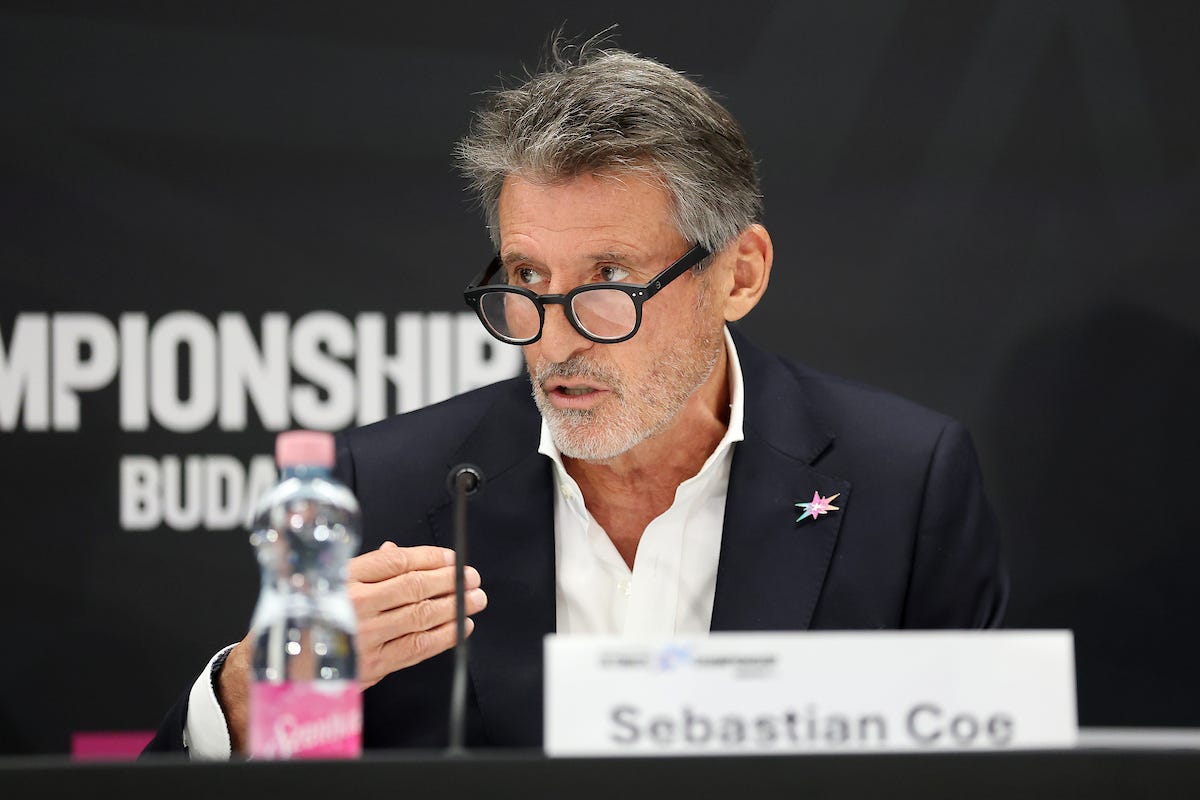
A few hours before the final session of the World Athletics Ultimate Championship, Seb Coe hosted a media breakfast on the banks of the Danube in Budapest. Just before we entered the room, Coe’s colleague at the global governing body, Jon Ridgeon, mischievously encouraged us to “ask him some tough questions!”
The only problem? The event had gone so well that it was difficult to conjure up any hard questions. Instead, Coe spent the media breakfast saying how pleased he was so far – and it was hard to disagree with him.
On the eve of his 70th birthday this month and as he starts his final year as World Athletics president, the creation of the Ultimate Championship could be one of his strongest legacies.
The day before the event began he described it as a “blast furnace of ideas” – which was a nod to his roots in the steel city of Sheffield – whereas on the morning of the final day, he added: “We’re an innately conservative sport – and I just think we’ve moved slightly away from the risk-averse end of that. Probably not by much, but it’s a start!”
Coe has strong views on many topics but he also enjoys consulting people. For the Ultimate Championship he made sure he quizzed athletes and spectators in particular when devising the formula. Once underway, he included his own kids in the debate. “My two daughters said ‘the vibe’ is really good,” he said, “they just felt it looked more serious and less ‘last week’.”
What worked?
As an Athletics Weekly journalist since the mid-1990s, I’ve seen lots of new events and ideas come and go over the years, but nothing quite on this scale. World Athletics put an enormous amount of time, money and effort into it – and it paid off.
Most notably the $10 million prize pot, with $150,000 to each individual winner, ensured the big-name athletes turned up.
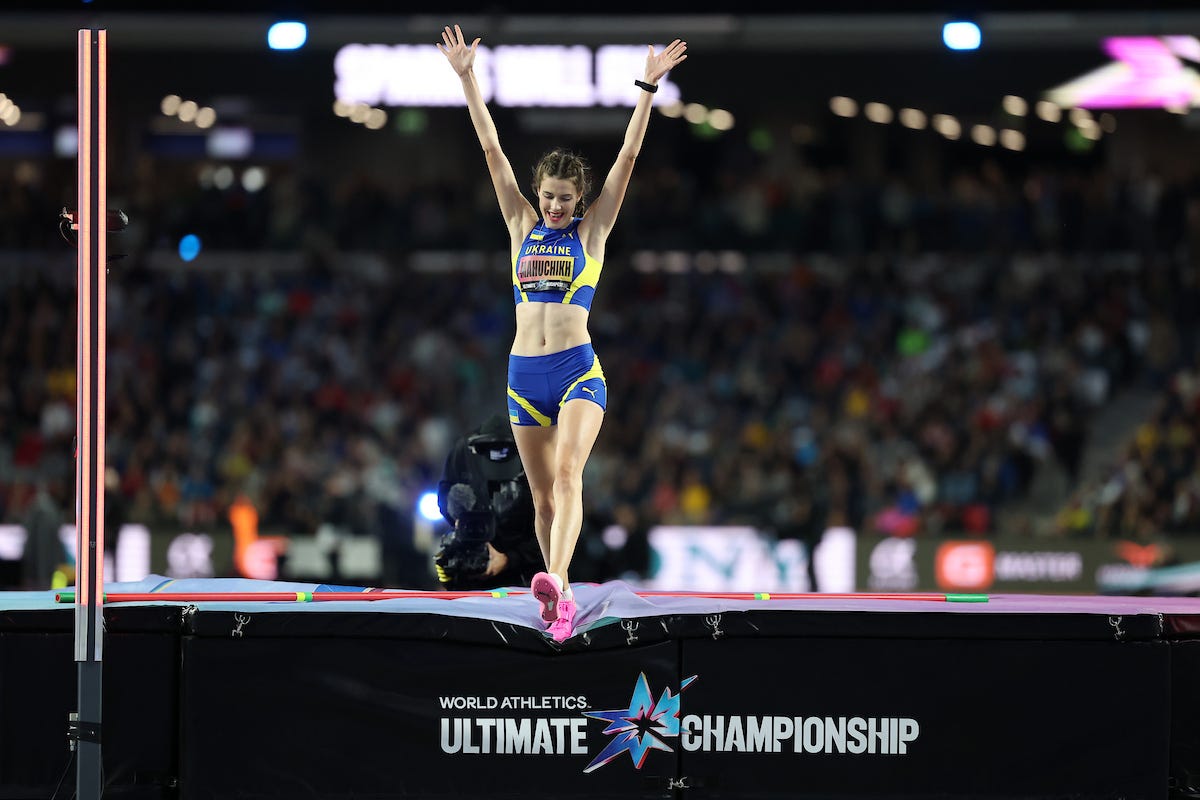
Despite cool conditions, especially on a chilly opening night of the three-day meeting, the performances were brilliant. They included:
Melissa Jefferson-Wooden clocking a sizzling 10.62 and 21.47 in the women’s 100m and 200m as fellow American Kenny Bednarek won the men’s sprint double.
Jakob Ingebrigtsen enjoying a stylish 5000m victory in 12:59.24.
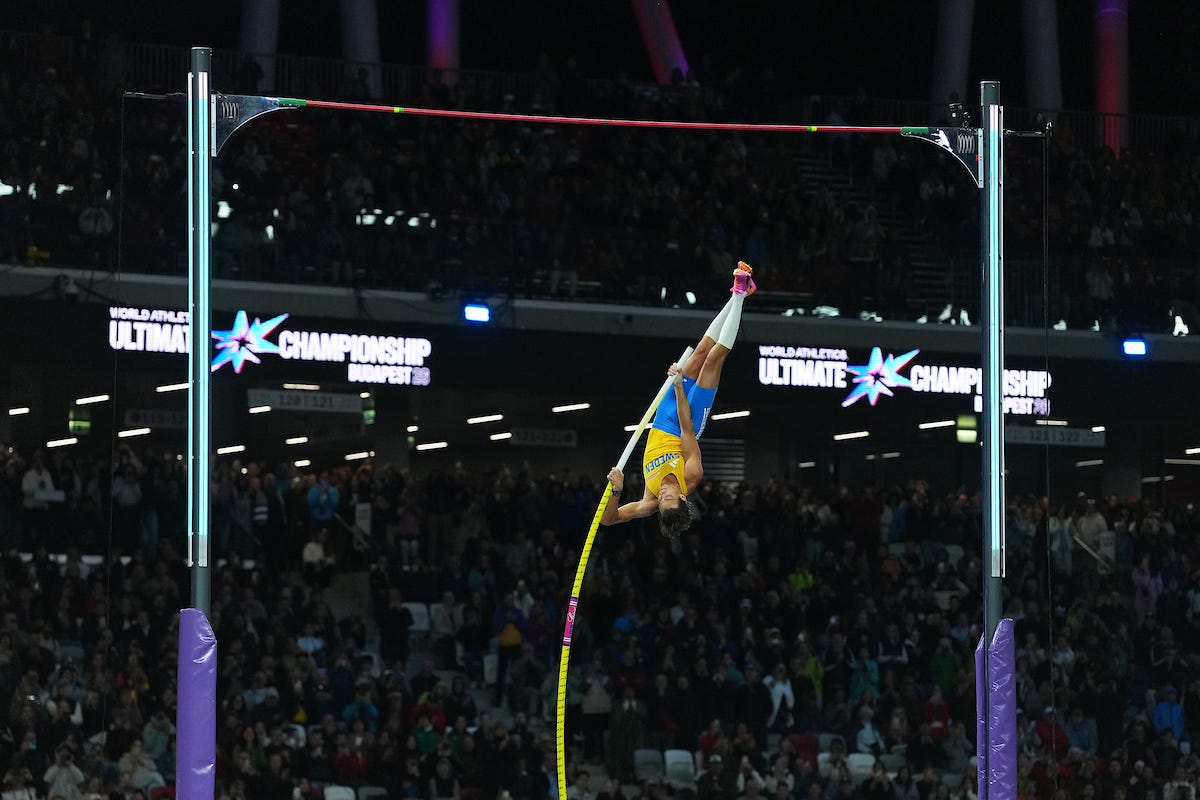
Mondo Duplantis bouncing back from injury to win the pole vault with 6.20m and then serenading the crowd with his Ultimate Anthem “Gold”.
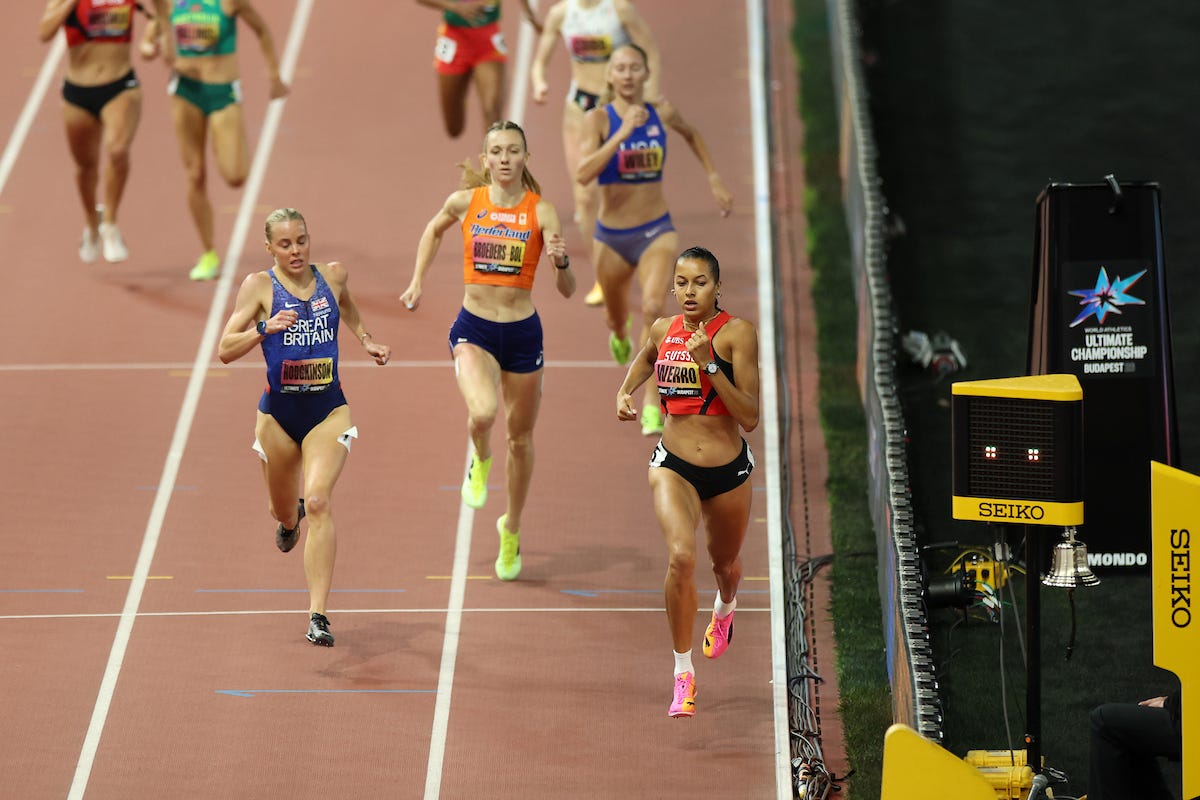
Audrey Werro, the 2026 queen of the 800m, again beating Keely Hodgkinson and Femke Broeders-Bol in a two-lap showdown.
Collen Kebinatshipi running the fifth-fastest 400m in history with 43.39.
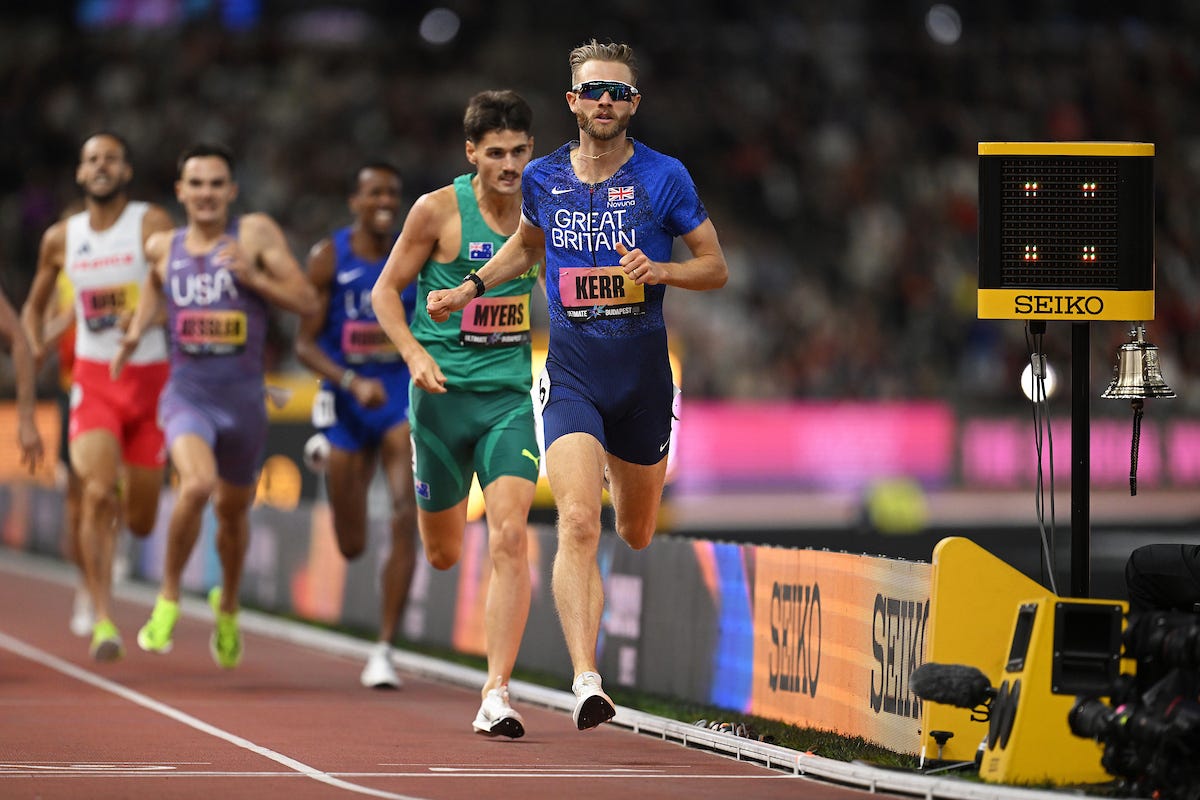
Josh Kerr stamping his authority on the men’s 1500m to complete a dream year.
With fireworks and flashing lights, the event presentation was excellent, even if it did have a bit of a Britain’s Got Talent look to it. Small touches such as the pink sand in the jumps pit and plush seats for field eventers were good, although the latter looked like they’d been plucked out the VIP section of Cineworld or Vue.

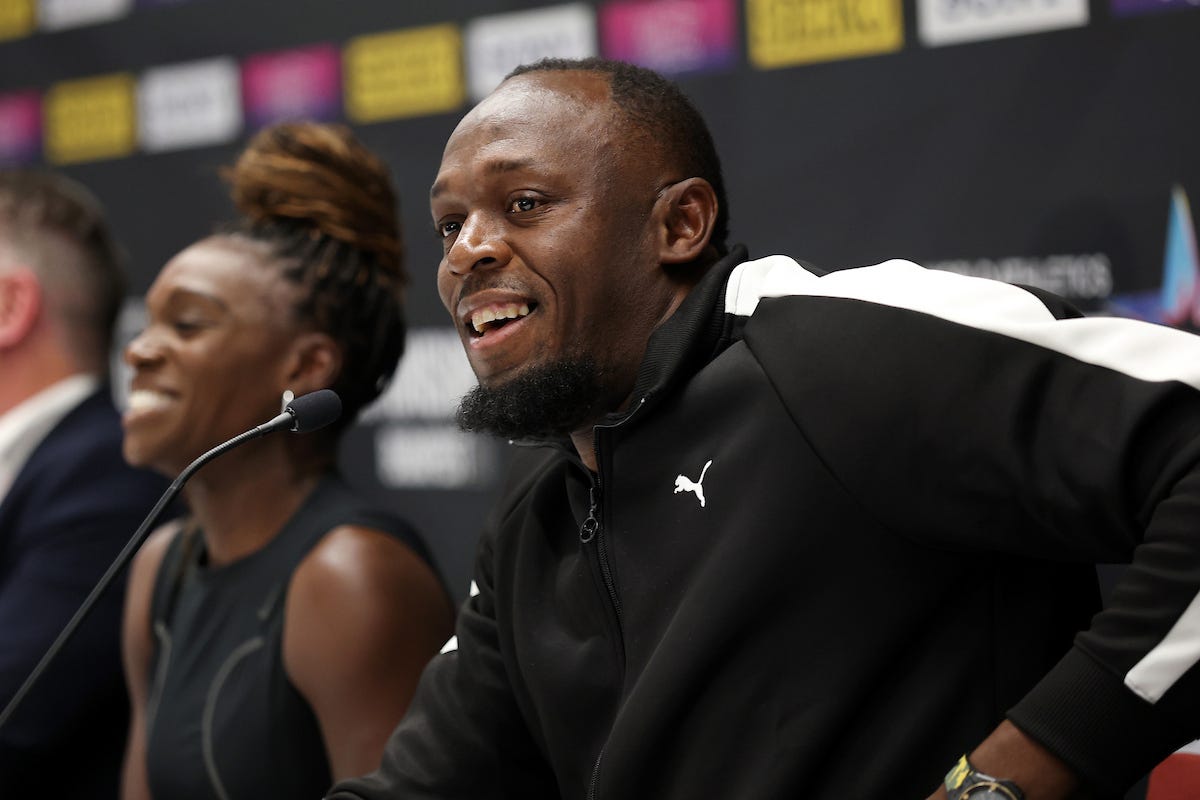
Usain Bolt’s presence as an ambassador was significant as the greatest athlete of the modern era was effectively giving the event his stamp of approval. “I feel Usain is back in our sport again now,” said Coe, “and that’s important.”
The atmosphere in the arena was great and helped by a knowledgeable crowd, home interest such as Bence Halász in the hammer and a capacity audience of 61,671, although to put that into harsh perspective it was the same number over three days that the London Diamond League on July 18 achieved in one afternoon.
What didn’t work?
The statistical predictions were supposed to enhance the viewer experience but they were ridiculed when Ingebrigtsen and Kerr in particular were judged to have no chance but ended up winning. In Kerr’s case he was predicted to finish 13th in a race of 12.
While the Ultimate Championship was great for the athletes who were there, a number from ‘excluded events’ were left disgruntled. They included the men’s shot, discus and triple jump, women’s shot, discus and hammer – and more.
World Athletics tried to put the spotlight on events one at a time, but you could argue the beauty of athletics is that several events unfold simultaneously in a busy arena. Sometimes it can be chaotic and tricky to follow, but isn’t this a large part of its charm?
World Athletics made a lot of the 200m lane draw, but I was left wondering what all the fuss was about. Similarly, the ‘red carpet’ event on the same day left me a little non-plussed although it was interesting to see competitors in non-athletics apparel for a change.
As for my own media experience? It was generally good but not perfect. I was apparently one of 337 accredited media at the event. I wonder if that includes World Athletics’ sizeable army of writers, photographers, videographers and social media people, all of whom do a fine job of (a) reporting on their own event and (b) drowning out independent coverage from Athletics Weekly among others. (My views on this topic here by the way).
The event was also bereft of ‘influencers’, probably because shoe brands weren’t paying them to attend on this occasion. Still, ‘content creators’ are a rising force and, as with the World Champs in Budapest in 2023, there can often be some tension when digital and traditional media collide. At the Ultimate Championship, for example, there was a nasty confrontation in the mixed zone after the women’s long jump when a newspaper journalist took umbrage when a couple of content creators strayed into the print media section.
Black to the future
The dark in-field divided opinion. It was nearly washed away, too, by heavy rainfall the night before the meeting began. This led to the paint-sprayer being forced to put in some overtime to make sure it was blacked out again.
For me, it worked quite well at night as a backdrop to the lights. It also helped create the event’s distinctive branding. As Coe pointed out, this area was so strong that the Ultimate Championship successfully established a strong brand before the action even began, which is rare for a sports event.
Ultimately (no pun intended) Coe would like the track and field season to be longer than it’s current June-September period. Does this mean future editions of the Ultimate Championship will be potentially held in October? “That’s a question for my successor,” he told me.
That could well be Ximena Restrepo, 400m medallist at the 1992 Olympics for Colombia. Interestingly, she is from Medellin, which is called “the city of eternal spring” due to its constant climate during the year and lack of distinct seasons. Coe, however, is from a country with very distinct seasons and where outdoor athletics is challenging from October to March.
Still, he feels the season should be extended with meetings held in parts of the world that have a suitable climate at specific times of the year. He doesn’t expect athletes to compete a lot more, but enjoys the idea of giving them more options.
I’m not so sure. As we discovered in Budapest, the European summer starts to turn ‘autumnal’ once we get into mid-September. Athletes also feel pretty weary by this stage.
As for fans? Do they really want the track and field season to start even earlier and linger into October? Among other things, sports such as football have already taken the spotlight by this stage.
Athletics has always been a ‘summer sport’ and should remain that way, with the Ultimate Championship in early to mid September being a fine way to bookend the season.
Nice work Jason. The content creator ‘coverage’ of the sport was interesting to hear and how this is impacting traditional media coverage of the sport. I potentially see the influencer/ instagram coverage of the sport as a race to the bottom and many events will be (even more) left behind. I think many people, like me, long for the drama of competition to be played out with more texture and description. Competition needs context, drama and aftermath and this can’t be achieved superficially.
It was fun. But felt more like a grand DL final. Thus I don’t see the point of the DL final and this in the same year.